Thursday, June 28, 2007

Paraguay Travel Advisories

Here is the latest security information for Paraguay as of January 2007:

As stated in the Department of State's latest Worldwide Caution, U.S. citizens overseas may be targeted by extremist groups and should maintain a high level of vigilance. The U.S. Embassy is not aware of any specific terrorist threat to Americans in Paraguay. Individuals and organizations providing financial support to extremist groups operate in Ciudad del Este (map) and along the tri-border area between Paraguay, Brazil and Argentina. Small armed groups have also been reported to be operating in the San Pedro and Concepcion Departments. Drug trafficking remains a serious concern in the Department of Amambay. Because of concerns about the lack of security in border areas, the U.S. Embassy in Asuncion requires U.S. Government personnel and their family members to provide advance notice and a travel itinerary when traveling to Ciudad del Este or Pedro Juan Caballero. As a general precaution, the Embassy also counsels its employees traveling outside of the capital to provide an itinerary including dates, contact names and telephone numbers where the employee may be reached.

Although kidnapping remains rare, several high profile kidnappings for ransom have occurred in recent years. Targets are usually established members of the Paraguayan business community or their family members.

Thursday, May 17, 2007

Soybeans and Land Issues in Paraguay

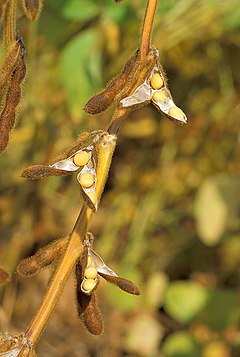
Unequal land distribution is not the only land issue in Paraguay. The FNC (the country's leading voice of the peasant farmer, primarily cotton farmers) is also upset at foreign soybean producers who take advantage of cheap Paraguayan labor and land. Foreigners have planted half of Paraguay's usable land as genetically modified soybeans and made the country the forth largest soybean exporter in the world (see here for more export numbers).

Additionally, there are rumors of widespread use of pesticides and fertilizer that poison the soil and harm near-by residents. FNC has organized a number of protests during which two protesters were shot dead when they failed to stop at a police check point. The landowners said cannot spray the soybean fields without angering the peseants and and began protesting themselves. Their group, Coordinadora Agricola de Paraguay, say the peasants are extorting the landowners so they will give up thier land.

Paraguay's Land Problems

After Paraguay's defeat in the War of the Triple Alliance (1865-70) the country was forced to pay reparations to Argentina and Brazil. The state sold huge tracts of land in northern part of the country near the 3 boarder region. That trend continued when multinational companies from Brazil and the US starting buying the land and developing mechanized farm production. Now most of Paraguayan farmland is owned by a very few foreigners. This from an Intelligence Research report dated 21 December 2004:
At least half of Paraguay's land is owned by foreigners. The data on land tenure provided in the agricultural census of 1991 (see bottom page 11) shows that there were 307,000 landholdings in Paraguay. Some 62% of these farms had less than 10 hectares each and owned just 2.8% of total land. The largest 884 farms, 0.3% of the total, had more than 5,000 ha each and accounted for 56% of total land. The smallest farms or minifundios averaged 1.7 ha, or less than is necessary for one family's subsistence.
Mechanized farming did little to help Paraguay's overwhelming poor population: the peasants couldn't afford to invest in such farming themselves and because the practice minimized labor they had no jobs for them either.

So in November 2004, after several failed promises by the Duarte government, a group know as the National Federation of Campensios (FNC) began invading and taking land from farms greater than 30,000 ha in central San Pedro and south-central Caazapa. That same month in two separate incidents FNC members raided a police station and also killed a police officer.

The land invasions were eventually put down and arrests were made on hunderds of campensios squatting on the siezed land. Also arrested was the FNC secretary-general, Odilon Espinola.

In December another FNC leader, Marcial Gomez, met with President Duarte.

...i don't know how this was resolved...

The Duarte government has since made appeals to the poor cotton farmers, offering $50 subsidies to farmers not able to sell at the minimum price. FNC rejected the offer. Duarte then upped his offer, pledging and to promote a debt refinancing program and to absorb the debts of-scale cotton producers made by purchasing agrochemicals.

Paraguay has several organizations pushing for land reforms: the National Coordinating Committee of Campesino Organizations led by Luis Aguayo; the National Campesino Federation led by Odilón Espínola and Marcial Gomez

Tuesday, May 15, 2007

US Soybean Subsidies

Between 1995-2005 US soybean growers were given $13 billion in federal subsidies. Payments peaked in 2001 at over $4 billion and have come down in recent years to $500,000 while corn surges ahead at over $9 billion. Most of these subsidies went to large farms earning about $3 million over ten years. More than 80% of all soybean subsidies went to farms in the top 20%. (All this comes from the Environmental Working Groups Farm Subsidy Database)

Farm subsidies are the favorite whipping boy of urban anti-corruption groups who see them as handouts that take money away from other worthy programs and suppress market forces endangering free trade. In part they are right. When soybean subsidies peaked in 2001 global soy prices reached an all time low. Also interesting is that total revenue from soybean sales appears independent of subsidies. Note the 2004 jump when subsidies were low.


Either way, President Bush has supported cutting farm subsidies in the 2007 farm bill, especially direct payments to large farms. However, public opinion still leans in favor of subsidies because America's food supply is too important to risk to economic fluctuations and farmer need protection from cheap labor overseas. Here's a survey that shows farmers and their subsidies still enjoy a great amount of public support nation wide.

Monday, May 14, 2007

Global Soybean Roundup

Had enough of soybeans yet?

Globally, oilseed production has increased 22% (80 million tons) in the last five years. (Soybeans account for the largest share of oilseeds, 86%). The increase in oilseed imports comes entirely from China whose imports have increased by 42% (8 million tons). The top five exporters of oilseed are:

United States 30.59 (million tons)
Brazil 25.77
Argentina 7.71
Canada 7.39
Paraguay 3.84
China 1.53
Ukraine 1.09

In the last three years two countries have show dramatic increases in exported oilseed: Canada (60% increase) and Paraguay (32%). USDA's Foreign Agriculture Service says Paraguay has the world's fastest growing oilseed production, projecting their 2007 crop to expand 65% over last year's (for chart, click here and choose table 11 under "field crops").

Diving into Paraguay's agriculture statistics (CSV database available here) we see Paraguay's soybean production is up 53% since 2003 and up 117% since 1996. By the same token exports have increased 37% in 3 years and 77% in 10 years. What's most startling is the amount of land being converted to fuel this boom: since 1996 more than 3 million acres have been turn to soybean production (the size of Connecticut) and just last year nearly a million acres were turned to soybeans (about 60 times the size of Manhattan)

The vast majority of Paraguay's crop are exported. In fact, after the soybean boom of 1976 more than half of Paraguay's soybeans were exported. In recent years Paraguay typically exports 60-70% of it's soybean crop.

Friday, May 11, 2007

US Soybean Roundup

Let's talk soybeans.

Soybeans are a legume that grow about 8" high. They cover more the 75 million acres in the US and gross more than $18 billion a year making soy the second biggest planted field crop. (For a little perspective, New Mexico is 73 million acres and the porn industry sells $20 billion in adult movies).

Here's a link to basic soybean stats. And here's a map of where soybeans are grown (mostly along the Mississippi and Arkansas rivers).

The soybean industry is quick to call soy a miracle crop that accounts for 64% the world's protein consumption. They are, as they say, "the world's foremost provider of protein and oil." I wouldn't know how to qualify that other than saying that Tyson Chicken also call themselves "the world's premiere protien provider," and Damien in the movie Omen also called himself the leading provider of protein.

Nevertheless, US soybean production has increased 33% in the last 10 years thanks to China doubling it's soybean imports to to be used for humming meat consumption. In fact, China is the only country buying more and more American soy exports, roughly $2.5 billion or 36% of all exports and 13% of US soybean production.

Another reason for the increase in soybean production is biofuels (more to come soon).

All this being true, soybeans are loosing ground to corn and overall soybean prices are about the same as they were 30 years ago (though there has been a 23% jump in soybean oil prices--again, more to come soon). For 2007 crops corn is expected to out-earn soybeans; estimates say soybeans will earn nearly $100/acre than corn thanks mostly to increased demand for corn-based ethanol.

Friday, April 20, 2007

Tools for Looking at 990s

Everyone thinks Guidstar is the end all be all for looking up non-profits, but there are more options out there and not all of them retrieve the same data. So far I've found:

GuideStar (only 3 990s for free and they are always hounding you to become a member).
Foundation Center's 990 Finder (sometime gives different hits than GuideStar, has an ultra-handy zipcode search)
Economic Research Institute (several more archived 990s, don't seem after your money, also touts nonprofit salary research)


Here's a handy document that tells you how to read a 990.

Friday, April 13, 2007

Crack Addict Bankers Put Their Finger in the Dam

From the Website of the Neighborhood Assistance Corporation of America

NACA announces ONE BILLION dollars in assistance for subprime lending victims. While the predators are blaming the borrowers , NACA is the first to provide a solution to save peoples home. Click on the enclosed Press Release for more information on this "first of its kind" announcement.

The deal is Bank of America and CitiGroup will advance money already promised to NACA who would in turn use it to refinance subprime mortgages (2 million of which are set to click up several points this year). So for those who spent money they didn't have to buy houses they couldn't afford: whew!

...or maybe not.

NACA says a billion dollars can only bailout 7200 families which leaves more than 900,000 shaky loans still out there. Eyes are now looking toward a federal bailout (S&Lwha). But who needs bailed out isn't exactly clear.

Nonprofits say working families were taken advantage of by predatory lending so it's them we need to help. Local governments are cringing over the idea of a run on housing and plummeting property taxes. And everyone with a stock portfolio is anxious to prop the market up.

Oh wait, I almost forgot about the kind folks who lent the money in the first place (from WaPo):

"If we foreclose, we lose 50 cents on the dollar generally, and the cost to restructure the debt is typically a heck of a lot lower than that," Litton said. "That's our motivation."
Perhaps lenders should have checked for more than a pulse before they dolled out the credit. When did the mortgage industry start resembling crack addicts?

Thursday, April 12, 2007

Gawkers Abuse Young Silver Spoon

Nothing beats Gawker when it comes to revealing the collective insecurities of our nation's media clinger-ons.

Like a scene from the high school cafeteria, Gawker hires irreverent-irreverents to trash talk and dictate what's hip and cool. Then every bitter editorial assistant in NYC joins together to come up with the most unique way to repeat what was just said. Here's a particularly vivid example of this where the folks who write your TV Guide listings joined together to humiliate a college student the New York Times selected to be one of its bloggers.

So, yes, grown adults took time away from fetching their boss's latte in order to collectively stick their tongues at a college kid just getting started in life.

...not that'll she'll have a hard time of it, what with blogging for NYT at the tender age of 22.

Friday, April 6, 2007

Indians Could Get Better Healthcare in Prison

Buried in a survey released last month by the Robert Wood Johnson Foundation was the news that--more than any other racial group--American Indians took the biggest loss in the number of workers offered health insurance by employers. 86,000 Indians lost health coveragebetween '97 and '05 . That 5% drop is twice the rate that whites lost coverage, more than blacks (3.3%) and certainly more than Asians (.5%).

The U.S. has signed hundreds of treaties with various Indian nations promising to provide access to healthcare in exchange for their land. However, according to the 2004 report entitle "Broken Promises" by congress's U.S. Commission on Civil Rights

[the] nation’s lengthy history of failing to keep its promises to Native Americans includes the failure of Congress to provide the resources necessary to create and maintain an effective health care system for Native Americans.
Specifics are much worse:

Life expectancy for Indians is 5 years less than the rest of the U.S. population; suicide for Indians and Alaska Natives is 2 1/2 times higher than the national average (and ranked 3rd in the world); annual healthcare expenditures for Indians are less than half what America spends for federal prisoners' healthcare, 50% per capita what we spend on an average American, 33% what we spend on war veterans, and 7 times less than what we spend in Iraq in one day.

...oh yeah, and we took their land.


Thursday, April 5, 2007

My Bank the Crack Addict... how to get paid for not paying

Remember the days when the bank would bulldoze your house if you didn't pay your mortgage. Gone, gone, gone. Now you can get paid $100 just for falling behind in your payments:

The Mod Squad is planning a six-city tour; it hopes to attract struggling homeowners to information and counseling sessions with offers of $100 gift cards to Home Depot Inc. The number is (877) 362-6631.
Not only that, but mortgage companies are adjusting adjustable rate mortgages with the hope that they won't default and continue sending in those monthly checks. In essence, lenders are in the position of having to do anything to keep people spending or else they and everyone else starts losing money. Perhaps the system has become so efficient that that makes sense.

But it makes you wonder if the American economy has become so addicted to consumption that banks are willing to forgive missed payments just to keep feeding the addiction.